On December 14, 2017, you did one of the most thoughtless, insincere, undermining things to an internet that not only you don’t understand — but also an internet that YOU do not own. A little 3-2 vote to repeal the regulations for Net Neutrality — a shame and embarrassing when 5 individuals get to decide on the fate of the internet as we know it. You know that it is bad when the man responsible for the internet itself, Tim Berners Lee, speaks out against you. It’s even more shameful when your clown of a chairman, Ajit Pai, was once Associate General Counsel at Verizon…..who is just one of the entities that would benefit greatly from a rollback of net neutrality protections.
Why is it that we can give ISPs and major corporations so much leeway but not protect the consumers, WHO MAKE THEM RICH? Why is that so Mr. Pai? But it’s obvious your ignorance goes farther than we think on these issues. How is data transmitted over the internet you ask? In packets. A movie file you stream may be billions of packets while that email from grandma may only be one hundred; however, at the end of the day — a packet of data is a packet of data.
It does not matter who sends that packet, who is retrieving that packet or WHY that packet is being sent…the internet is designed to not discriminate and the push those packets along. Yet, when business gets in the way and certain entities business thoughts don’t align, it becomes ok to change that? No. It doesn’t.
To the three individuals voting to strip away the net neutrality guidelines, I hope your internet is severely throttled — better yet, you don’t even deserve internet since you’ve undermined the entire infrastructure of the internet itself. The internet is too good for you.
Final Thoughts
Our internet service providers supply the internet, THAT is it — the problem comes when they think they should encompass your entire experience and insert themselves everywhere. But you’re already paying for internet, so what else could they possibly want from us? Nothing. As it was noted on the Vergecast, AOL had us all fooled by making us think that all of the internet was in that AOL window; however, you could minimize that and open Netscape or Mozilla!! AOL didn’t own it, they simply put a fancy skin on top of it. Now, Comcast and others want to create their own internet “experiences” while killing it at the same time.
DO NOT let lawmakers dismantle the internet. Visit BattleForTheNet and overload them with calls and voicemail citing your disapproval.
Want for find out more about net neutrality? Read a fantastic post from Save the Internet, here to get the scoop on how our internet is supposed to be.
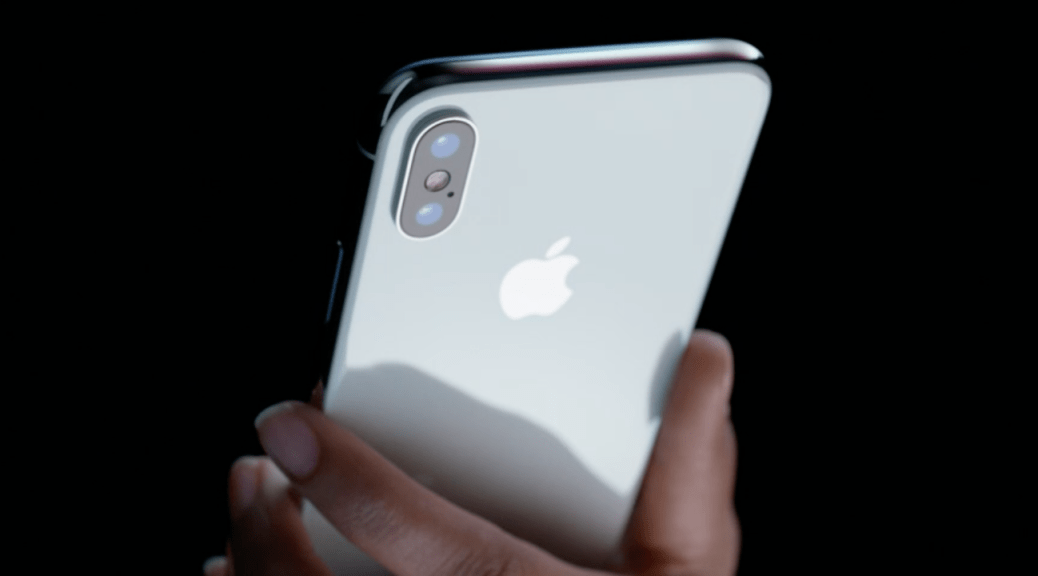
Ah, the iPhone X…….the glorious, magnificent, flawed…..iPhone X. Whether you like it or not, it’s here and I’ve got all the dirty details. My preliminary disclaimer: I will not tell you what to do or not do with your one thousand dollars, that’s up to you my friends!
Background
Leading up to the launch of a new iPhone this year, it has been long rumored that Apple would switch to a bezeless display, regardless if other smartphone manufacturers were or not — it takes years for this stuff so no one is copying off of one another when these features take years to design, test and produce. Apple has had it’s iconic home button since 2007, then with the advent of iPhone 7 and 7 Plus, the button changed from mechanical to software based — that along with it’s usual forehead and chin have been mainstays in determining what is and what is not an iPhone.
Enter iPhone X. Minimal bezel all around the glass, no home button, simply a “home bar” indicator at the buttom, no forehead and chin — simply a notch (more on that later) at the top that houses the True Depth camera array used in FaceID. This is a radical departure from iPhone of old and when you pick this thing up, you’ll immediatelly realize, it’s a good departure.
Design
The design of this phone, as well as all other iPhones and most of Apple’s devices, is nothing short of beautiful and it feels significant and great in the hands navigating throughout the operating system with an undeniable premium feel.
Next, the thorn in the side of this device that everyone has talked about before it was even released — the top notch. To be honest, you completely forget about the thing as you move throughout the OS and between apps, however, once you see it on a white background or an unoptimized app — it is ugly and in many instances, it can get in the way. There are many Apple centric websites and podcasts that I listen to and frequent, and they note that “once developers update for this” it will be better. The issue with this statement is that this is a design FLAW that has been introduced by Apple and developers are being forced to code around for a device that touts a larger display that the Plus model; however, has actual less usable space because of the notch and the rounded corners on the edges of the display. So, you’re either going to hate or love the notch — for me, I am not a fan as long as I don’t see it….unfortunately, here’s looking at you, developers.
Usability
iOS has been praised for being easy to use and it’s no different here as long as you are fine with a bit of a learning curve. Note, this curve will be fairly straight if you’re a fellow tech nerd; however, it could be problematic for users that love what they are used to. To put it simple, the home bar, could be usability issue for the non-tech enthusiast.
Gestures. The iPhone X is all about gestures and they are nothing short of great.
Swipe up to go home. Swipe from side to side to multitask between apps (this may be the best multitasking paradigm when going between apps on a mobile device, period — it’s that good). Swipe up and hold for traditonal multitasking (same as a double-click of the home button on iPhone 8 and below). See the video below for a sample of the interactions mentioned above on iPhone X:
Control Center additonally has gone through a few changes, the old gesture of swiping up from the bottom is no more as it has been moved to a swipe down from the right “ear” next to the notch at the top — this is something that I’m not a fan of. Not because it doesn’t work, but it’s a paradox to what happens if you swipe down anywhere else. If you swipe down on the left “ear” or from the center of the notch you get notifications. Realistically, one could be unsure how discoverable this can be. However, it is important to note that with iOS 11, Control Center is much improved.
Display
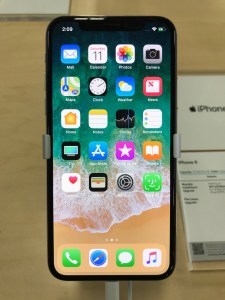
Apple has made the switch to OLED, which gives users more in many ways, such as battery savings on dark backgrounds and more realistic colors (note that Apple’s LCD displays featured on the rest of their devices are simply the best in the business). This display is produced by Samsung, but Apple led in the design of this display and it is absolutely flawless. While the Note 8 display is fantastic and industry leading in many ways, so in this one — thanks Apple!This display itself sits at 5.8″ respectively. While this in itself is larger than the display on the iPhone Plus devices, which is 5.5″ — there is less usable space, which actually gives it a size comparable to the 7 or 8 — non Plus model. This is all because of the design choices that were made on this device with the rounded corners and True Depth camera array at the top. This makes that usable area less wide and seemingly not as tall as the Plus model, leading to less space and wasted space. Seen below:
Have a look at the Human Interface Guidelines here provided by Apple for the best experience on iPhone X, which is somewhat constrained. See below:
Source: Apple
While this display may be great in terms of accuracy, there were compromises made to make it “edge to edge”.
Camera
An iPhone camera is always industry leading and the iPhone X is no different. The cameras (dual) in the camera are the same as the iPhone 8 Plus, except for the fact that the telephoto lens on this device adds optical image stabilization.
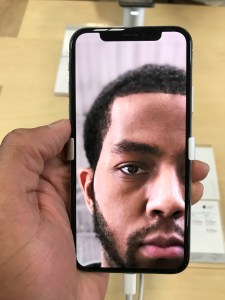
The rear camera produces some of the most realistic shots that I’ve ever seen from a mobile device. The iPhone, just like the Pixel 2 and Note 8 are in a league of their own. Additionally, iPhones X and 8 Plus rear portrait modes are industry leading (alongside the Pixel 2) and consistently will provide an accurate, true to life picture. New with the iPhone X and iPhone 8 Plus, Apple introduced portrait mode on the front-facing camera and it is a complete disaster. Here is an image sample from the front camera:
What needs to be scrutinized here is the distortion around the edges of my hair. You will see that it is blurred out as the subject (me) is detected; however, the software is unable to accurately discern what is part of my head. Note, that portrait mode is an ongoing “test” and has notably gotten better over time.
Wrapping Up
Although, this may appear as a scathing write up, I was actually impressed with the device. Multitasking and gestures are fluid, the camera and display are great and iOS just works in the same consistent and reliable manner that we’ve all gotten used to. No, it’s not bad that the operating system hasn’t changed much over the past few years, radical redesign isn’t always necessary.
However, no phone is perfect and many publications may hint that this one is — it’s not — but we must look at this device as a first generation device. Face it, all of the new features packed into this device such as the True Depth camera system, edge to edge display, Face ID and others are all on an iPhone for the first time. I am not giving Apple a pass here, simply stating a fact and noting that things need time to progress and mature. If you are looking for an experience that you’re used to pick up an iPhone 8 or 8 Plus as it is built off of the iterative design of the 6 and yes, it is darn near flawless. On the other hand, if you must have the new and shiny, you’re not necessarily a Plus user and you’re up for a extraordinary gesture based experience, you simply can’t go wrong iPhone X.
Note: FaceID was not covered as part of this hands-on because the unit used was in demo mode. The demo app on the device appeared to work smoothly; however, for a more in-depth review of the technology, refer to the video below:
It’s 2017 people, ads are everywhere, malicious software is everywhere, eyes are everywhere and they don’t necessarily want your money.
Data.
Data is one of the most important things that many give to so many companies so freely; however, it can have some of the most dire consequences. A simple first name, last name and email address can be used to figure out what state you live in, your address, telephone number, voting statistics and more. The horrible part is that we agree to it! Have you ever really sat down and read a ToS (Terms of Service) or Privacy Agreement for an online service that you sign up for? There are no truly free things on the internet — when you don’t pay, you and your data are the fees.
In the below, I’ll break down the common attack surfaces in which you need to protect yourself by describing in detail what they are and giving you ammunition in your fight for your RIGHT to online and digital privacy. (Remember, contrary to popular belief by friends, family, and employers — you have a right to your privacy.)
Apps & Software
Why start with apps first? Simple. We are on our phones from the moment we wake up checking Facebook (I’ll make you terrified of them later) until we lay it down at night. What a better way to protect yourself from malicious apps than not installing them at all?
When you are browsing your App Store of choice for that next big thing there are 4 things to consider:
Who made the app?
Are there common issues which are seen in the ratings/about section that you should be aware of? (Such as update date, constant bad reviews, etc)
When agreeing to the Terms of Service, what do they actually say?
Upon installation what permissions does it need? (Location, Camera, Microphone)
Note that denying access to one or more of these permissions could cause the app to not work properly, but that is a cost we can pay for increased privacy and security. My recommendation is to give apps the least amount of permissions at first, then add when necessary while never giving access to Location Services unless you fully trust the app, most apps simply do not need that level of access
I do not expect you to read the Terms of Service or Privacy Agreement in full for every app, some are simply too long. However, there are keywords to look for that I advise you to check (use the Find command, if you are at a computer Ctrl + F brings up this search) before agreeing to use a free app again:
Data
Personal
Privacy
Usage
Share
Third-Party(ies)
If you do keyword searches on these and they comeback with hits, read the selected sentences and agree to those terms only if you are satisfied and agree with the potential risks, if any.
Service Providers & Snoops
Your internet service provider (ISP) might be one of your biggest foes, little did you know. Whether you are on wifi at home utilizing Comcast’s services or on the go with a blazing fast LTE connection from MetroPCS, Verizon or another cellular carrier — your ISP can track your every move and they want to sell your data. Additionally, there are malicious actors on the internet that can act in the middle of the router you are connected to and the internet itself (which is why it’s never good to join wireless networks you are unfamiliar with) and can see your data while it is being sent and can even manipulate data and images that you see — this is called a “Man in the Middle Attack“.
It may seem that there is nothing you can do, but there is and it’s fairly simple to implement and will cover most of the security risks above.
VPN. (I’ve talked about this in depth previously, please read all about it)
A VPN connection creates a secure tunnel between your computer and whatever item you are accessing on the internet and your machine uses the remote computer to do it’s online surfing. What does your ISP see? They see absolutely nothing. They can tell that you are connected to “private host A”; however, they cannot see the contents of the data being transmitted — they see a garbled, encrypted mess, which is exactly what we want! You can even use a VPN to alter your location, in many cases, media providers like Netflix and others do not like users to utilize a VPN or proxy to connect.
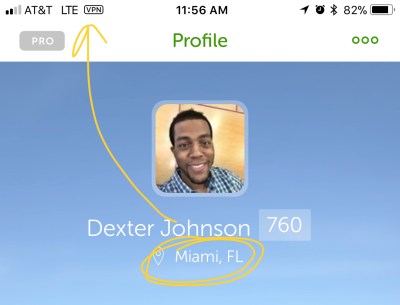
Example of how a VPN connection appears in the system status of iOS and showing the user’s location is altered. (You just have to trust me when I state that I don’t live in Florida)
Ad Companies
Facebook, Equifax, Google and others have developed a bad wrap for their potential data selling in the marketplace. (Let it be known, as I’ve stated before Google doesn’t sell your data or “follow” you around the internet, they primarily sell access to you in the form of ads that you see based on information that you provide — remember those Terms of Service agreements that you likely didn’t read? It’s documented there.) Google may not be squeaky clean, but they are leaps and bounds better than people give them credit for in terms of security and privacy. The company offers dashboards for the end user and allows you to customize every piece of your experience and what types of data (if any) are collected. Read their privacy policy here as well as a previous DexJohn’s PC post about their privacy stance.
On the other hand, companies like Facebook are a little more nefarious. Ever heard of Facebook Pixel!? Of course you haven’t, because it’s designed to sit in the background, installed on your favorite websites, and watch your every move on the internet and serve you “relevant” ads whether you are a Facebook user or not.
Hardware Protection
We walk around carrying priceless data on our devices, from friends and family information including notes, phone numbers and addresses, not to mention personal passwords and more, which should all be kept in encrypted form either on device or in the cloud. There is absolutely no reason to not have a passcode on your device, whether it is a mobile device or laptop. Protecting your hardware is one of your first defenses. Take this example, you have no password protections on any app on your device; however, you have a lock-screen password — at least you’re somewhat safe. Create a password that has a combination of letters (upper-case and lower-case), numbers and a symbol (my iPhone password is over 20 characters long). Your password doesn’t have to be as long, as long as it is complex and something that you can remember. If you need help creating a secure, complex, lengthy password visit here, shown below:
To be private and secure one cannot simply utilize the tools that are available on his or her mobile device or machine. Only through a set of secure apps and protocol can one travel down the road to increased privacy.
Password Manager — A password manager is essentially for your privacy and security. There are several options where you password database are stored in the cloud such as LastPass and 1Password, while there are offline options, which are considered more secure, such as KeePass.
VPN — A VPN is necessary for masking your online activities (just because you’re masking because of privacy DOES NOT mean that you are doing nefarious activities) from your ISP, attackers and services online. Some options that are prasied are PrivateInternetAccess, Proton VPN, IPVanish and more.
Terms of Service Help — Ever heard of “tldr” or too long didn’t read? There is also tosdr for Terms of Service Didn’t Read and this website can help you understand what it is that you’re signing up for. Additionally, while reading and agreeing to privacy statements, be sure to use my Find and search technique, outlined above.
Chrome/Browser Extensions — We all use one of big browsers as our gateway to the internet. Add these extensions to hamper tracking by Facebook and eradicate insecure connections.
HTTPs Everywhere — an extension created by the EFF and Tor Project and it switches sites from http to https, which is secure.
Ghostery — Protects you from trackers and optimizes the web
Facebook Disconnect — Blocks Facebook ads from Pixel and its potential tracking of your traffic all over the web
AdBlock — Blocks obtrusive ads on Facebook, Youtube and multiple place
Wrapping Up
Remember, these are all tools to add to your privacy and security arsenal and is in no way a complete list or a complete listing of products I use — just ones that I consider essential.
Short story here, it’s an iPhone people. It’s an iPhone. But this isn’t necessarily a bad thing.
Design
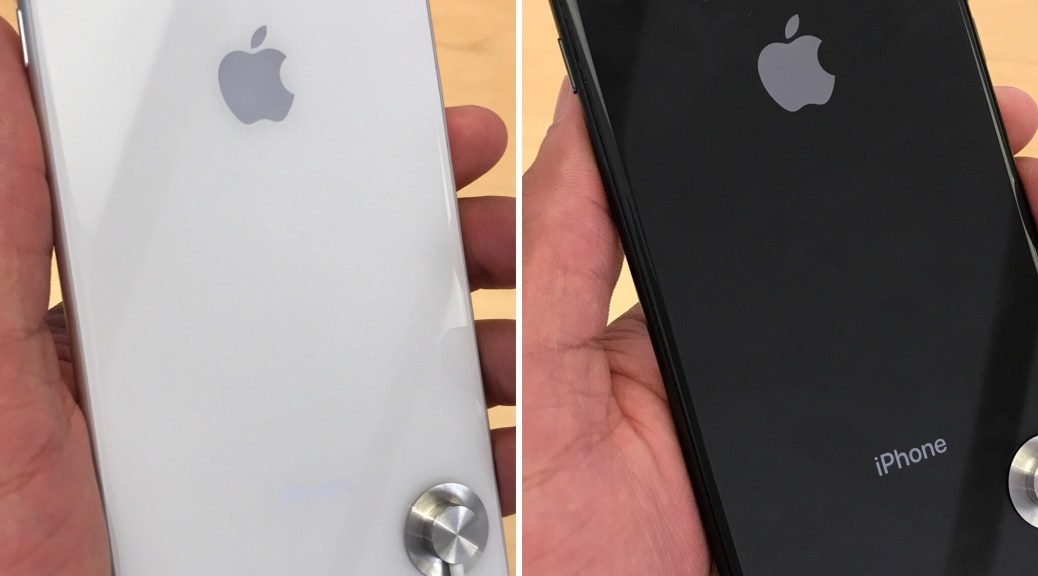
The design of iPhone 8 and 8 Plus is largely unchanged from it’s predecessor, maintaining a familiar body, weight and style even allowing for previous generation cases to fit perfectly on the new devices. Immediately upon picking up the device you notice the glass back, allowing for inductive (not wireless) charging, giving the phone a slightly grippier feel compared to that of iPhones 7 and 7 Plus as well as further hiding antenna lines commonly found on mobile devices.
The glass back truly brings in “peak” iPhone design.
Features
First off, don’t let anyone tell you that the newest devices from Apple aren’t worth your attention, sure they look similar, but internally there are changes throughout. From finally adding QI “Wireless” charging, the new A11 Bionic SoC and new camera specs — we’ve got a true update on our hands.
Should I Buy It?
Question of the day. If you’re coming from iPhone 6 or 6S (either model), there is NO question here — open the Apple Store app or go to your closest store and buy one of these phones. If you have an iPhone 7 or 7 Plus, you may want to reconsider. Could you upgrade? Yes, and I surely won’t stop you from handing Apple your money, however with the 7 still being extremely capable — just use your best judgement.
Overall
It’s a good device. Apple delivers year over year some of the most refined and consistent devices, iPhones 8 and 8 Plus are no different.
Google has done it again. They got on stage, as only Google does, and have shown us an array and beautiful new products that will be available in a few weeks, Fall 2017.
Google opened the event with Sundar Pichai expressing sorrow for all of the recent events taking place in the world, from the hurricanes that have swept through coastal cities and islands to the act of terrorism in Las Vegas. From there it was back to back product announcements that showed the prowess of Google’s machine learning and artificial intelligence skills, in addition to their growing maturity at “Made by Google” hardware.
Google Home
Users of the Google Home love it, from the ability to start playing songs from Google Play Music or Spotify, to playing a YouTube video directly on your ChromeCast enabled TV, Home does an amazing job at connecting you to your “things”. Updates to Google Home and Google Assistant including the following:
Voice Match — Google Home will now identify all users of the device, simply by their voice. This means that you and your partner’s contacts do not get mixed up when trying to place a call or calendars don’t get intermingled when asking about your day.
Integration into an array of new Nest products, while connected will allow the user to view the stream of an entrance to a home and more all from the power of their Voice.
Updates to the Assistant that’s built into Google Home surely mean a new device right?
Absolutely.
Enter Google Home Mini. The Google Home, in a smaller package, all for $49 and housing the power of Google Assistant. This could turn out to be a huge game-changer for Google in their quest to capture the living room. (Especially since this device is included with purchase of another that was released later, read more below.)
Source: The Verge
Google Home Max
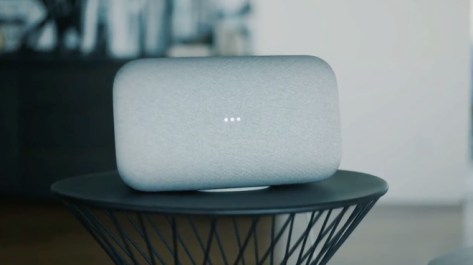
Ever wanted a speaker that really “thumped” with the power of Google Assistant baked in? Meet Max, the newest member of the Google Home family. Starting at $399, this is a powerful (20x more powerful than the standard Google Home) speaker that’s meant to take on Apple HomePod, Sonos and others. The device features dual 4.5″ subwoofers for deep bass pulses, a sturdy housing, which means no creaks from the speakers, custom tweeters and acoustically transparent fabric.
Google Home Max listens to where it is in the room and adjusts the audio to just the right levels so that it’s output is perfect for any room. Additionally, the microphone is extremely sensitive, so it allows for the user to interact with the device without the need for yelling and shouting.
Google Home Max.
Starting at $399.
Google Pixelbook
Chromebooks, we’ve all heard of them. How about the fact that now, every child in a classroom can have their own personal laptop — thank Google. How about the fact that you now have a device that can be essentially virus free with a keyboard — thank Google. Also, how about the fact that you are one sign-in away from all of your content, bookmarks, movies and email — thank Google.
Source: The Verge
These are just a few things that make the Chromebook an excellent device, but Google had to make one too. Say hello to the Pixelbook, the all aluminum, 10 hour battery, core i5 and i7 packing, glass trackpad wielding laptop from Google. This device is nothing short of beautiful and of course, this is the first Chromebook experience where Google Assistant is baked in. Additionally, many Android apps are coming out of beta and should run smoothly with powerful Intel chips behind them. Google is really pushing Chrome OS hard here, especially with the latest feature of this device, which allows you to tether automatically if you have a Pixel phone nearby and wifi signal isn’t strong — Instant Tethering. Throw in the Pixelbook Pen, which allows you to annotate, pull out content and more all with the lowest latency currently on the market.
Source: Made by Google
Starting at $999 for Intel Core i5 with 8 GB RAM.
Google Pixel 2 & Pixel 2 XL
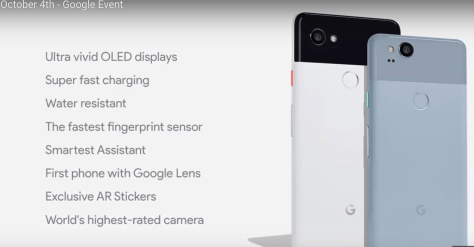
Building off of the success of the original Google Pixel and Pixel XL, which featured arguably the best camera on an Android device and maybe on a smartphone (Don’t believe me? Look at some pictures for yourself!) Google gives us Pixel 2. Below is a breakdown of specs:
Google Pixel 2 & Pixel 2 XL key specs.
This device looks to have packaged all of the good things of “Pure Android” into a device that just works for the end user adding no gimmicks, just a device that works well without the extra bloat of apps that are trying to replicate a standard Google experience. Additionally, adding water resistance to this years’ model is huge, which is something I have vocally criticized numerous times due to the fact that Google charges a premium for a device; yet, can’t protect us from a splash….Really?
Similarly, Google has added Portrait Mode into the camera software, which will allow the user to capture photos with realistic (one shot they showed on stage was brutally awful) shallow depth of field. Pixel 2 is able to achieve this without the need for a second lens due to how the camera captures pixels of the shot and of course some excellent AI.
Overall, the product looks to be a top-tier device that is in contention for Android device of the year. As said in the below video, “We make it look easy!“.
Source: Made by Google
Starting at $649 for Pixel 2 and $849 for Pixel 2 XL.
Google Pixel Buds
Wireless ear buds with the intelligence of Google Assistant built right in, giving you the capability to translate on the fly. Yep. That’s pretty fancy and they are here, built by Google.
Source: Android Authority
While the earbuds are not single ear buds like Apple Airpods, they are tied together; however, the buds follow a similar design scheme that we’ve seen from other Made by Google products. Since Google Assistant is on board, a quick swipe of the right bud will get you access and you’ll be able to jam out or chat with Google for an estimated 5 hours per day while the case can further charge the headphones.
Google Pixel Buds (shown in case)
Starting at $159.
Google Clips
A small camera, designed for parents and pet owners alike — that’s built to capture those special moments, with privacy built in that only saves “clips” once you’ve confirmed and stored on the camera fully encrypted before it’s transferred. Clips is a “smart” camera and recognizes expressions, the appropriate lighting and framing of it’s objects — all automatically when the camera recognizes something that you’d like to capture all while being in the background and non-invasive (no microphone and an indicator light that shows when it’s on).
As you see, this camera is focused on freeing the user from the device and has an emphasis on privacy, something of which people think Google takes for granted — read their privacy policy if you believe that.
Starting at $249.
Source: The Verge
TLDR
Google announced an impressive array of devices, which time will only tell if the company will continue taking hardware seriously — for now and the past couple of years it has by creating solid incremental updates to existing devices and pushing out thoughtful new ones.
Good job, Google. Good job.
Tech for the masses, meant to empower, educate and inform by Dexter Johnson.









 DexJohn's PC