Apple HomePod Impressions

Easily one of the most aesthetic, beautiful smart speakers on the market.

Enter Apple HomePod.

Let’s start off by saying that Apple is marketing this as a device that is “speaker first”, meaning that they are aiming to provide a device that gives you excellent sound quality with a voice interface, which is controlled by Siri.  That doesn’t necessarily make it a smart speaker right?  Well, it sort of does, especially when you can control HomeKit devices, send iMessages and play music — all tell tale signs of smart speakers. So although Apple doesn’t want the comparisons — there will be and I’d argue that there should be and is, based off of what this device does.

IMG_1669
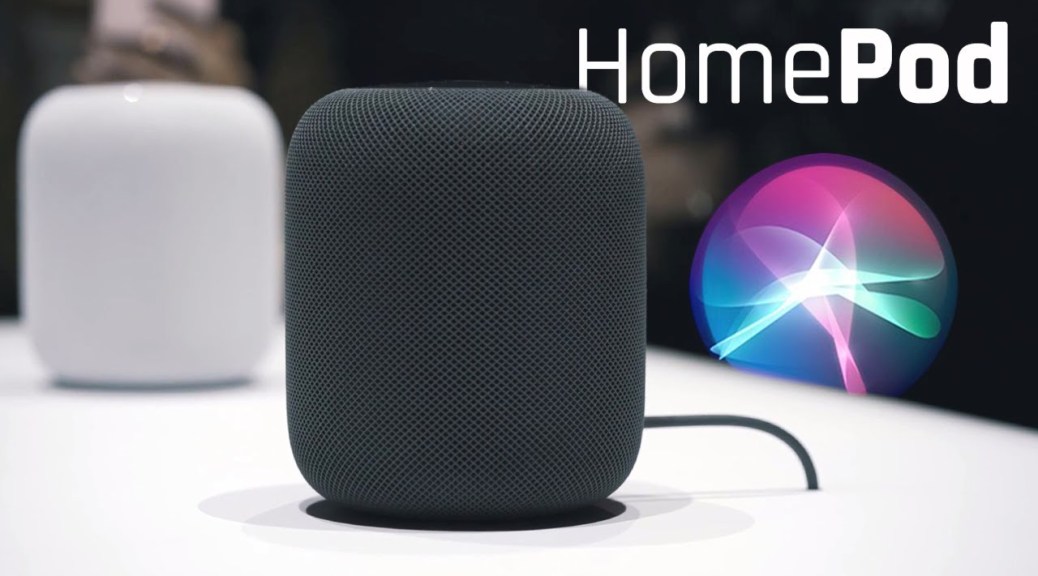
Apple HomePod (white), pictured in Apple Store.

Background

Apple has noted that HomePod has been in development for 6 years. That being said, this product aims to mesh together the worlds of audio, smart assistants and more in a pint sized package.

Design

As I noted, the design of the Apple HomePod is nothing short of fantastic.  It is a hefty, yet small speaker featuring a soft mesh outer covering housing the many speakers, tweeters and microphones crammed inside.  There are two colors that HomePod comes in, white, which gets dirty quickly and space gray.  When it comes to ports on the device — there are none, with the only thing coming from the HomePod is it’s power cable, which is of exceptionally high quality featuring a woven covering.  Note that are no other ports on the device, no aux in, no USB, which should be fine for most, as we are moving to a predominately wireless world.

Sound

I was able to get in a solid test, standing fairly close and moving my head all around in a local Apple Store and I was thoroughly blown away.  The key thing to remember about how this sounds is “sound separation”, a listener can literally hear all of the sounds coming from the speakers, every instrument, every differentiating aspect of the song is clear and very crisp.  This is one of the biggest differences when comparing to a Google Home, which I currently own, or Amazon Alexa.  Google Home in comparison sounds slightly muffled and sounds mesh together, while HomePod seems to produce the music in a very accurate way. However, when it comes to overall volume, the Google Home Max still takes the cake in this department — that thing is just loud with very good bass.

See a sound test below comparing the HomePod to other smart speakers as well as Sonos Play (which I believe has an edge over HomePod, with Google Home Max being louder but lacking the auidble clarity due to distortion at higher volumes):

https://www.youtube-nocookie.com/embed/oImOYg_dSl0

On the other hand, the only sound that you can ask Siri for is for music from Apple Music.  No Spotify, Pandora, Google Play Music, Tidal (laughs) or others unless you choose to AirPlay them, which somewhat takes the intuitiveness out of it.  If I have to grab my phone, go to an audio source and Air Play that source to the HomePod — then what are we doing? It’s simply too much effort when voice is my supposed interface. In fact, to set the device up, you must have an iOS device running iOS 11.2.5.  So all of the Android users that utilize Apple Music — you cannot setup this device.

Note:  Since this review and hands-on was done in store, I was unable to test “Hey Siri” functionality.

Ecosystem

This device is heavily integrated into the Apple ecosystem and it’s thought process on devices and services you should have.  With that being said, the lock-in here is huge with only Apple Music being at the forefront with no other alternatives even being available to control via voice unless you’re noting for it to move to the next track.

Privacy

Unfortunately, at this time, Siri cannot support multiple users.  An example is that if you ask it to read personal details such as text messages and your notes, it will read those items off to anyone that issues the “Hey Siri” command to it.  This is especially odd, since Apple touts this device as being very private and other Apple-centric analysts on podcasts are quoted as saying, “I’d never have a Google or Amazon speaker in my house due to privacy“.  Siri can differentiate between voices on your iPhone, iPad and Apple Watch, but can’t on HomePod.  This is a huge miss and being someone, who is privacy focused and someone who deletes my voice data weekly from Google Home, I understand the need for differentiation of voices on smart devices — yet this goes full circle to Siri not being that smart and the fact that there are multiple versions of Siri spread across Apple’s ecosystem.  You have Siri on iPhone and iPad, which are identical, then you have the gimped versions on Apple Watch, Mac OS, Apple TV and finally HomePod.  So let’s not talk about “privacy” (this is talking to you, Rene Ritchie from Vector) until Siri can stop being so fragmented across devices made by the same company. Additionally, HomePod doesn’t offer a mute switch for the microphone either, which is featured on Google Home and Amazon Echo devices — instead, you must ask Siri to mute the microphone using a command.


Overall

If you are engrossed in the Apple ecosystem and are in the market for a speaker that can deliver excellent sound quality, HomePod may be right for you.  However, no product comes without it’s limitations, as Apple simply isn’t open to many other companies when it comes to HomeKit integrations or third party music platforms and if you’re accepting of that, this could be right for you.  AirPlay 2, stereo pairing with other HomePod devices and other features are slated to be released to the devices later in 2018. Siri capabilities are quite a disappointment as Siri on your iPhone can do more than on the HomePod.

At the end of the day, if an only if you’re committed to everything Apple would I recommend this.

My Apple Lock-in

Everyone goes with an ecosystem for a reason. I don’t consider myself an Apple loyalist by any means. I am a fan of technology, exemplary design and quality. Some continue to use and buy every Apple product because of iMessage and not wanting to see that dreaded green bubble.

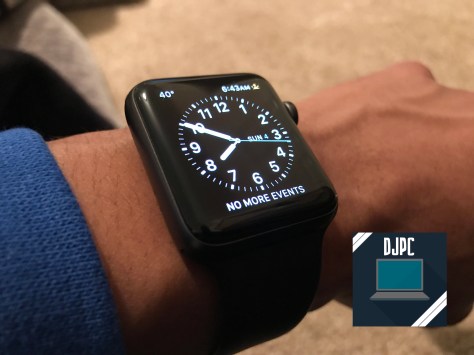
For me, the answer is different. For me, I’ve got to have Apple Watch.


Why

Apple Watch is the only relevant smartwatch on the planet aside from devices by companies such as Garmin and Fitbit — yet these are fitness trackers first.

Where is Android Wear? Stagnating because of the fact that Google isn’t doing the best job managing the platform. Samsung wearables are seen from time to time; however, the device that occupies most wrists that are charged daily is the Apple Watch. At this point, it would be difficult to move to a different platform without having a dependable form of wristwear to accompany my smartphone.


Intangibles

There are many things that Apple Watch does that you can’t see. A device that’s so reliable, you never need to worry about it working. Additionally, the safety of having a solid ecosystem behind you is second to none. Watchbands are made by Apple to the established Hermes.


Final Thoughts

Apple Watch, not only the best smartwatch but an excellent ecosystem to be apart of.

What Apple’s HomePod Isn’t

Apple’s HomePod is available for preorder now and will be shipping and available in stores on Friday, February 9th.  Apple Music, home control, smarts and more are what this speaker aim to give customers.


Background

At WWDC 2017 HomePod was announced and touted to be a revolutionary speaker, that aims to use a seven tweeter beam-forming array, 6 microphones, Apple’s own A8 chip and a top loaded woofer to deliver an unmatched musical experience.  Originally, the device was slated to ship at the end of 2017 and got moved, as Apple products other than iPhone, do to a later time.

That time is now.

Source: Apple

Out of the gate, Apple noted that this product is “speaker first”; however, you would interact with it through a voice layer — Siri.  Apple’s digital assistant has gotten a lot of well deserved hate over the years for simply lacking in substance when compared to Google Assistant or Amazon Alexa.  Instantly, Apple is saying to not compare the HomePod to a Google Home or Amazon Echo product, not because they necessarily believe that their product will instantly be better — but because of what HomePod isn’t.  HomePod isn’t meant to be a smart speaker, it’s meant to be a revolutionary audio device that will fill any room with sound like it’s never been encompassed before.  It is not meant to knock your socks off by what Siri can do and in all honestly we know that at this point, Siri lacking in the “smarts” department is an understatement.

With that being said, “speaker first” continues to ring in my head — so what does that mean?  For the price of $349, I should expect to get a high-quality audio device that can rival the king of consumer home audio, Sonos, who is known for producing high-quality, high-fidelity speakers that you can stream audio to and HomePod is coming for the throne. On the other hand, regardless of how Apple positions this product, the majority of customers will look at this as a smart speaker, rightfully so — meaning that in 2018 it may be speaker first, but at some point, it’s going to need to flex those “smart” muscles.

The Year of Retro Gaming

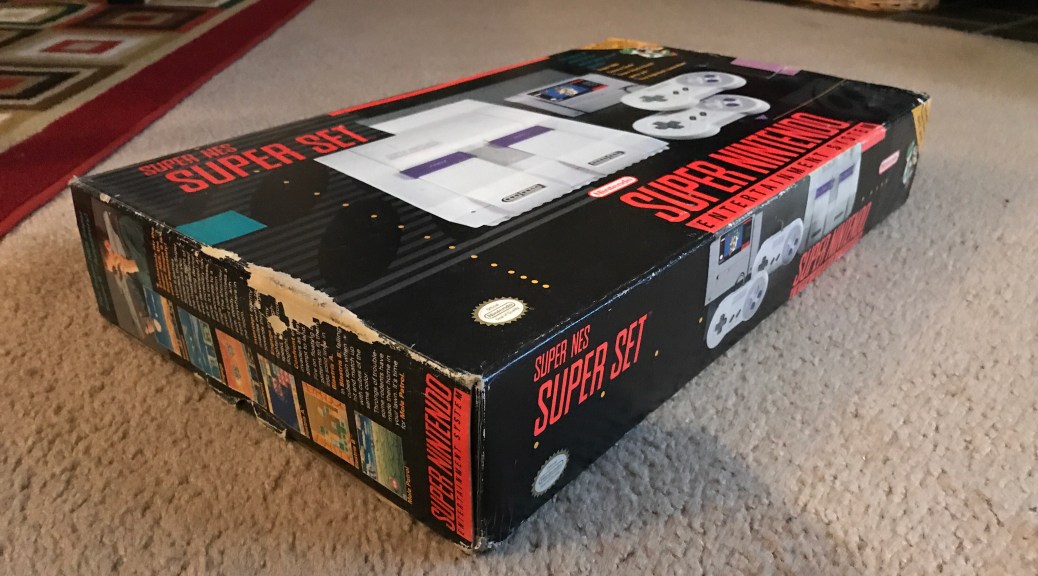
Super Nintendo, Sega Dreamcast, Sega Master System, 3D0, Turbo Grafx and more! Playing older consoles, collecting for them and learning more about the older classics has become a thing with rising prices and huge followings.


Why?

Video game have been part of culture for some time now and with many of the generations that were first introduced to gaming growing older, they also been the same group that wants to collect from the time of their childhood. Why? Because these games are truly fun and marked the humble beginnings of franchises we see today. Remember those games that you traded in at EB Games when you were younger?

Bet you want them back now, huh? Not only is reliving your younger years fun, it can be quite expensive due to the fact that some systems and games were released in limited quantities, creating a smaller supply and an absurd resale market in the year 2018. Want a copy of PowerStone 2 for Dreamcast? Hope you’ve got an extra $100 laying around. Want a copy of Pan card Dragoon Saga for Sega Saturn? Sure!? That’ll be $600, please.


Where are the games?

Retro Gaming is essentially any console before the 6th generation (PS2, XBox, Dreamcast and GameCube), although a few people, myself included consider these retro. Games are all over the place, eBay, garage sales and locally.

More and more cities have retro gaming stores. Unfortunately, due to demand, online price guides and more, prices are pretty steady in most circumstances unless you’re buying a wholesale lot or getting a steal from a random yard sale you just so happen to pass.


Final Thoughts

Collecting, playing and enjoying older games is here and is here to stay. From exploding markets and arcades popping up everywhere you’re bound to either know someone or be a collector yourself. My key takeaway as a modest collector myself: Enjoy it.

Stringify for Home Automation

We are able to do more and more with our pocket super computers; however, have you heard of Stringify?  If you haven’t, it may be time for you to take this little quirky app for a spin if you’re into home automation.


Background

Similar to the app IFTTT, Stringify focuses on home automation in addition to one key difference, multiple triggers.

While IFTTT allows you to have one condition to be met to perform an action, you can string together multiple conditions then multiple reactions on top of that which allows you to perform quite complex automations called “Flows”.  See an example that I use below:

Stringify_01
Stringify Flow.

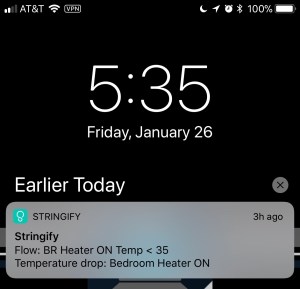
The above flow is used to operate a heater that is powered by a TP Link Smart Plug Mini.  The flow will trigger when the temperature is below 35 degrees Fahrenheit and between the hours of 9 PM and 5 AM, then turning on the heater and sending a confirmation notification to my device.  See the notification confirming that the flow has ran below:

Having multiple triggers is something that IFTTT does not support at the time that this article is being written.  As noted, this is the key difference between the two platforms; moreover,  Stringify also has far less connections than IFTTT.  So, while the most popular APIs may be available for you to integrate with, if you are a IFTTT user, like myself, you may be disappointed with the selection of integrations that are available.


Final Thoughts

Stringify is a very neat, niche app and while it offers a lot of power and customizations, it simply does not integrate with as many third parties as IFTTT; however, this is a growing list.  Note, that Comcast recently purchased Stringify and I am currently unaware how this may pan out.  With this being said, I urge you to give this a try — yet, keep in mind of how Comcast views consumer privacy.

Tech for the masses, meant to empower, educate and inform by Dexter Johnson.