Apple March 2018 Education Event Breakdown

On March 27, 2018, Apple let the world know that it aims to take on education.  There are numerous reasons as to why getting into education is a good thing when you’re a large technology conglomerate:

  • Device infiltration from an early age, thus creating Apple users for life
  • Competing in a new area

For some time, Google has been dominating the classrooms with the help of their Chromebook line.  These inexpensive, easy to configure and deploy laptops running only the Chrome browser (Chrome OS) are a mainstay in American schools because they are so affordable and Google services are free (we always pay — even for free services, more on that later).  While Apple has always wanted to be in the space, the company has yet to show how fully committed they are to providing tools that schools and administrators find useful or affordable.


Overview

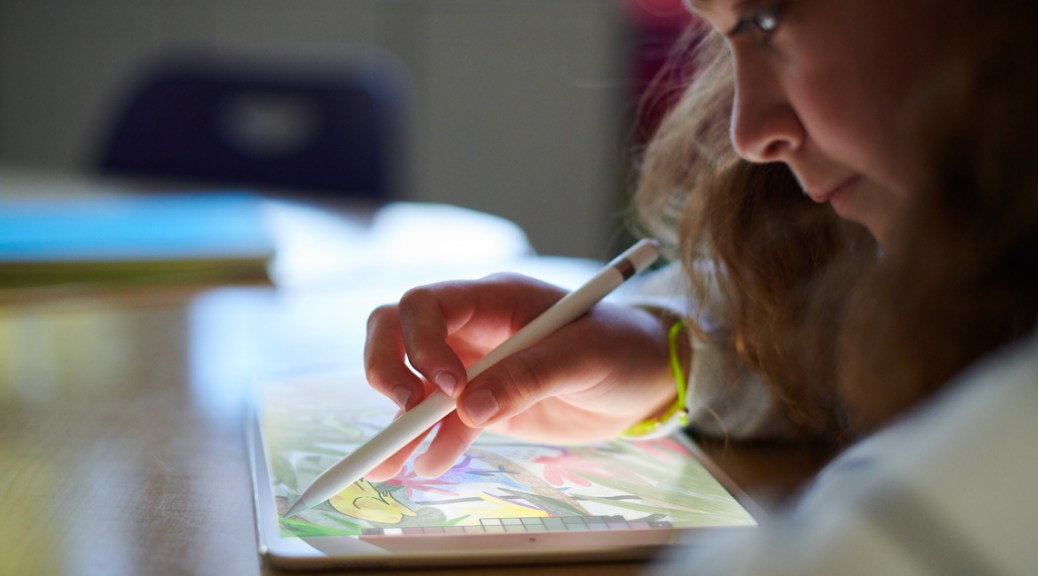
The highlight of this event is an all new 9.7″ iPad, coming in a just a little over one pound, that supports Apple Pencil, which is a big deal and will likely cause increased adoption of this new iPad by those wanting to use Pencil.  The device starts out at $329 for consumers and $299 for students.  This updated tablet features an A10 Fusion SOC, which is the same as the iPhone 7 and should provide lasting performance for years to come.  In addition to the Apple Pencil, Apple partnered with Logitech to create the “Logitech Crayon”, which will be available for $49, which is half of the price of Apple Pencil at $99 ($89 for students).  Logitech also created a rugged case, featuring a keyboard for $99.  This lower cost iPad does not feature the set of pogo pins, which would allow the attachment of Apple’s keyboard cover used on iPad Pro models.

Child-drawing-on-new-2018-iPad-with-Apple-Pencil

In addition to the smaller hardware announcements came big changes on the software front in iWork featuring updates to Pages, Numbers and KeyNote — all featuring Apple Pencil support.  One feature to note is “Smart annotation” to bring markup to Pages, which has been available for some time in other competing apps such as Google Docs.  Teachers will now have the ability to create digital books in Pages, which could be shared with students.  A feature that we’ve long asked for, Shared iPad, will be available for students featuring an interface where the student taps their picture and they are thrust into an experience designed for them because it will have all of their apps and settings available, regardless of device.  All of the Apple IDs created for students will be done through Apple School Manager, which can create 1500 IDs in under one minute.  Remarkable.  In the future students will be able to get handouts and more from their teachers in the Schoolwork app and be further managed in the Classroom app for Mac, which will debut in June and all work done within these apps will not be accessible by Apple.


Issues

Apple has done a great job playing catch up; however, there are still lingering problems that I see in this approach.  While the 9.7″ iPad will only cost a school $299, there are Chromebooks that cost $150 — while Apple will never say outright that they are competing against Google, the truth is they are.  In addition to the fact that in order to gain a full experience you need a pencil and under certain circumstances, certainly as the children get older and the type of work changes, you need keyboard support.  See a sample cost breakdown:

  • Apple iPad 9.7″ $299, Logitech Crayon $49, Logitech Rugged Case $99, bringing the total to $450
  • Any budget Chromebook $150-200, consumer purchase, note that a school will pay less

So for the experience that Apple is displaying, it will cost over 50% more (in fact, Apple Pencil itself can cost up to 66% the price of a Chromebook) when the end goal is the same, putting technology in the classroom to shape our future generation.

chromebook-or-ipad-for-classroom-debate


Wrap-up

Apple has made headway into education now by fully marketing towards educators; however, I feel like they’ve still missed the mark because the deployment of one iPad alone without any other accessories still costs almost double the price of one Chromebook.  It would’ve been nice to see them hit a $200 or $250 pricepoint here and with services that never seem to fully pan out — I struggle to see this changing Google’s lock on education any time soon. The hard truth is that if Apple wanted to create a true low cost competitor in this market for schools, they could — but as this announcement has shown us, they simply have not.

Additionally, many fans wanted to see a new iPhone SE or MacBook Air — this was an education event, for those of you who wanted those devices they may or may not come at a later time.

Reminders for iOS — Why I switched.

To-do lists, calendar apps all help you get things done and complete things on that worrisome epherial checklist. But that app or service you use will be different for everyone — is there a best? Maybe, maybe not.


Tests

I’ve used a handful of these apps over the years with TickTick, using Google login, for the longest. Additionally, I’ve have run-ins with Wunderlist as well which is simply bloated and not beautiful. An app should be functional, easy to use and easy on the eyes.

Enter Reminders for iOS…


Usage

Reminders is not just a reminder app, it’s for maintaining to-do lists as well to keep your organized. Any tasks or item can have a “Due Date”, which will force it into the composite “Scheduled” list on the day that the item is due. Additionally, look and feel of the stock app is heads over heels better than most third party devices. With lists that look like lists and an interface, which looks extremely open and useful — the end user gets a great experience.


Bottom line: If you haven’t found the “right” to-do app, give Reminders a try — it’s been right there all along.

You get a notch, you get a notch, everyone gets a notch!!

APPLE!! This is your fault. You’ve started a terrible trend in smartphones and you need to fix it because as of Mobile World Congress it has officially gotten out of control.


Background

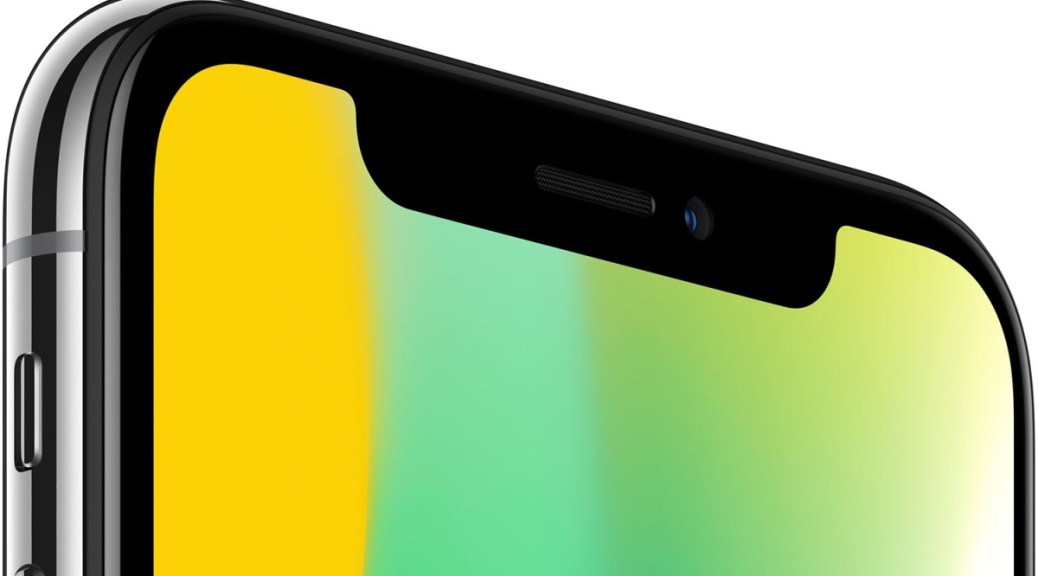
iPhone X was released last year with the promise of a full screen experience, although it’s clearly a pipe dream because the screen is interrupted because of a notch that houses the device’s True Depth camera system. Many Apple apologists claim that this notch disappears, while it mostly does, it’s still unsightly and calling it a feature is just being tone-deaf to the market. No one asked for a display that wraps around a component of the device. We want larger screens, however — why should developers have to pay the cost of having a screen larger than the iPhone Plus devices with LESS usable screen real estate because of the rounded corners and ears to the left and right of the notch?

Needless to say, it’s not pretty, functional or winning any design awards from DexJohn’s PC. In the case of edge to edge screens, while maximizing screen size….Samsung with the Infinity Display did it right, not Apple.


Fast forward

In walks every Android OEM that loves to copy Apple without reason. Some even tout that the notch on their device is smaller! But once again, who asked for it?

No one.

Although the decision to make a notch on the display is ill-advised, Apple at least does it for a reason — facial recognition. Android device makers and Google have not yet “cracked the code” on this tech, so at this point you’re copying to copy and not introducing anything new or better than the original flawed and uninspired design from Apple.

All in all, it needs to stop. These screen notches are a problem for apps, developers and end users (whether they realize it or not) and they are just plain stupid looking.


Wrap-up

Stop it, please.

Samsung Galaxy S9 Initial Thoughts

It’s that time of the year, Mobile World Congress 2018 and Samsung releasing another device to take the mobile world by storm — or will it?

Quick Thoughts

The Galaxy S9 and S9 Plus look stunning and carry over essentially all of the outside features from the S8 and S8 Plus, except the camera is reportedly improved and the fingerprint sensor is under the camera lens system this year, which is where it should have been since this design was drafted last year (way to backtrack Samsung).  Hardware is something that Samsung has been getting right for years now and it should come as no surprise to anyone that this thing looks solid as a rock.

Expect the normal array of colors with an all new Lilac Purple version upon release.  The display is still beautiful, as should be expected from Samsung with it’s patented Infinity display, which happens to look better than the iPhone X’s ugly notch, sorry.

Samsung-Galaxy-S9
Photo: Samsung Galaxy S9 Plus

Camera

Let’s talk about the major change in the 2018 device, the camera.  And it’s not just your regular camera, it is one that can shoot in multiple apertures, which is notable because smartphone cameras are usually fixed; which could lead some shots appearing soft — well Samsung aims to fix that this year — hands on tests will tell.  The amazing part is that when taking pictures, you can see the lens shifting to a different apertures to capture images in, which is perfect for light and dark shots — being more narrow in increased light and opening up more in low light.  It is notable and impressive that this is the widest aperture (f 1.5) ever included in a smartphone.

Lastly, AR Emoji, which utilizes the front-facing camera, allowing you to take a picture of yourself and creating a lifelike emoji of yourself that you can send to your friends.  Just like Animoji on iPhone X before, I wonder how many days it’ll take new Galaxy S9 owners to forget about.


Services

Smartthings and Samsung Health.  We’ve seen how the health apps work, and Samsung is stepping it up this year with sensors to help check blood pressure.  Camera integrations with Bixby to let you scan in foods and log caloric data into the Health app.  Additionally, with Smartthings, which is huge for those who are integrating connected devices in their lives, will be baked right in.

Check out a condensed version of the S9 event below:

Source: The Verge


Final Thoughts

You should be very impressed with this device.  The hardware is essentially flawless now with an improved camera, which was already one of the best.  However, the only thing that could hamper the experience would be Samsung’s version of Android and how it will hold up over time.

Hands on coming soon as  this device will be hitting stores on March 16th!


Can technology reduce gun violence?

For years we’ve had countless members of our government, primarily liberals, that have spoken out against our lackadaisical firearm laws in the United States. Not only do we have some of the weakest laws on the planet, we also have increased school shootings and acts of localized terror — irregardless of if current presidents agree on the terminology. It is truly a shame that citizens can easily obtain military grade weapons and use them on others. What’s even worse is that it is even more apparent that the NRA seems to be in the ears of half of our political system. Why? Money and power.

The looming question is that since we have technology creeping into every part of our lives — why aren’t there more technological controls on and around firearm safety?


Smart Guns?

Should smart guns ever be a thing? It’s been talked about and prototyped but it doesn’t seem that one of these things will ever see the light of day. Is it simply because it’ll disrupt a booming American industry? I think so.

So often are technologies put on display that wouldn’t even allow an operator, not considered the “owner” of the firearm, to discharge it without fingerprint authentication.  However, as usual with big business being behind every aspect of American life — it would be a travesty to allow a company to come in and instantly make our great “‘MERICA’ safer.  The NRA is a major driving force of why smart gun adoption is not growing in the United States, to think that an organization that things each citizen should have an entire militia at their disposal would want any gun.

Wrong.

smartguns1.jpeg

The NRA believes that smart guns could open the door into banning other firearms.

I agree whole-heartedly.  This is a conversation that should be had.  It’s one thing to own a gun; however, if you’re not military — you don’t have the right to walk into a gun show or pawn shop and purchase an AR-15, it is absolutely asinine.  The same logic applies that me, Dexter Johnson, being a Database Professional, can’t go buy surgical equipment — why?  Simply because I am not a surgeon and I do not require those tools.

Technology literally fills every part of our lives and it is truly sad that certain groups are holding on to guns as if they are the mark of freedom, an ignorant statement that gets the story wrong consistently.  Other countries do not have the mass shootings and gun related incidents that the US have because of steeper laws on the ownership and possession of firearms.  Additionally, let’s stop changing the narrative that I hear on repeat, “people kill people” and “the person was mentally ill”.  No one should make it considerably easier to commit murder and that’s what lackadaisical gun laws do and 30,000 gun related deaths (Source: CDC) in one year is not “ok”.  As Barack Obama said, “We are not trying to take your guns away.”  However, it is 2018 and we have fingerprint sensors, retina scanners, facial recognition technologies, AI and more that could be tied to a gun and built into it that not only could it only fire for a particular user, maybe, just maybe not fire at all if even aimed at a human.

Source: Motherboard, “Who Killed the Smart Gun?”

The largest issues here are when, not if — authentication on a firearm fails.  Let’s not forget that.  Does your iPhone unlock EVERY time you look at it or every time you place your finger on the fingerprint sensor?  No.  No technology is perfect; however, it works within a high enough percentile placing the acceptance rate at nearly 100%.  This is the primary argument against smart guns.  However, the same can be said about mechanical failures — they also happen without “smart” technology built in — yet, that conversation isn’t had.

Final Thoughts

Smart guns and an actual protections and trainings of the potential buyers, while not the only answers, can help bring down gun related incidents in the US, let’s just hope that our overly-conservative, NRA fearing administration can see that.  For everyone else working with technology, let’s find a way to keep this story at the forefront of our minds because technology can help if allowed to.

Keep in mind, that I don’t talk just to hear myself, I’ve provided a link to fast stats at CDC so that you can see the numbers for yourself as well as explore other statistics that are for public consumption.

Tech for the masses, meant to empower, educate and inform by Dexter Johnson.