Category Archives: Technology

Late 2016 MacBook Event Recap

“Hello Again” it’s happy time again in Cupertino with another event from Apple all about their infamous Mac product line.  We’ve been expecting a lot, hearing a little through the rumor mill and more — but what did we actually get?
General Updates
Let’s start with a review of what’s been happening in the world of Apple.  iPhone is doing extremely well with adoption of iOS 10 already at 60%.  Recent updates have enabled portrait mode on the iPhone 7 Plus and Apple Pay in Japan.  Additionally, on October 28th a new Nike branded Apple Watch (announced in September) will be available.  Apple TV now has 8000 apps available to it’s userbase with the popular game, Minecraft, coming to the big screen soon.  New features that are slated to hit boxes before the end of the year are Twitter integration into NFL and NBA coverage, which features a picture in picture styled approached that delivers rich Twitter content regarding the event that’s happening on the large portion of your screen.  A new app called “TV”, which will be coming to the Apple TV, iPhone and iPad seeks to bring into focus all things that you are watching across all of your apps so that you have a centralized “hub” for your media content and new ways to discover content that you may be unaware of.
But you want to hear about shiny new MacBooks, huh?  Well you’ve drug it out of me…
MacBook Updates
The new 2016 MacBook Pro will come in two sizes, 13″ and 15″ featuring a beautiful aluminum unibody design in silver and space gray color options.  As with other items in the Apple lineup, the screen will feature a wide color gamut resulting in a more vibrant and accurate display.  Important to note is that these are some of the thinnest and lightest laptops ever made by Apple with the 13″ MacBook Pro weighing 3 pounds and the 15″ weighing 4 pounds respectively while shaving up to 3 mm of the thickness with the lid closed.
Specs of Late 2016 MacBook Pro lineup as of October, 2016.
With new internals that match the sophisticated look, there is also a new feature called “Touch Bar”, which replaces the standard function keys on the two top-end models of the MacBook Pro.  The new notebooks will utilize AMD’s Radeon Pro graphics architecture (15″ model) , which is built to improve upon performance achieved by the last generation MacBook Pro line.  With all of these new features squeezed into a smaller more lightweight body, battery life will not be sacrificed as users can still expect to get 10 hours on the device.  Prices of all MacBook Pro models are shown below.
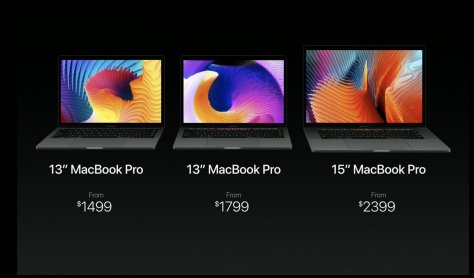
Late 2016 MacBook lineup as of October, 2016.
Prices of Late 2016 MacBook lineup as of October, 2016.
Touch Bar
Touch Bar is a new spin on the standard row of function keys that we’ve been used to for years — and this spin isn’t a bad one (or at least not awful).
MacBook Pro Touch Bar.
Touch Bar acts as functions keys; however, it is dynamic and shifts to help you control whatever app you are currently in.  If you are editing clips using Final Cut Pro, Touch Bar can allow you to trim clips, scrub the timeline and more.  For those who love to work in Adobe Photoshop, Touch Bar can apply filters, navigate between layers and scrub through all recent changes to your project.  Additionally, for the deejays out there, Touch Bar can completely change the workflow of mixing and take your abilities to a new and different level.  In addition, built into the bar is TouchID, which can be used for Apple Pay.  Finally, for all of the power users, Touch Bar can be completely (yes, completely) customized to your liking by simply dragging a new icon onto the bar from the screen of the MacBook using the trackpad.

Product Video (Source: Apple, Youtube)

Bottom line:  This is a solid update for the MacBook line.  Some are left wondering where are updates to the iMac, Mac Mini and Mac Pro — yes, I am part of that group.  I wonder if the Touchbar wouldn’t be more useful at the bottom of the keyboard so that the user doesn’t have to constantly reach to the top of the keyboard.

Huawei Honor 8 Hands-on

A wonderful glass back and a crispy 5.2″ screen.  Can we ask for more?  Yes, but this phone just feels right.
Enter Huawei Honor 8.
Huawei Honor 8.
Huawei Honor 8.
While I was unable to put this phone through it’s paces, from what I can tell, the software experience isn’t bad.  Although this is a skinned version of Android the UI still feels snappy and most applications load swiftly after pressing on the icon.  Huawei does not feature the app drawer that is common to Android, instead, it places all icons and widgets on the homescreens that are offered.  This device could be a could entry into the ecosystem of iPhone users that are accustomed to this type of setup.  In addition, while the software features are light, Huawei seems to have executed these additions tastefully as with it’s take on the notification pane.
Key specs:
  • 5.2″ screen
  • 1080p resolution
  • 1.8 GHz octa-core processor
  • 4 GB RAM
  • 32 GB internal storage
  • 12 MP rear & 8 MP front cameras
Huawei Honor 8 notification pane.
 The camera, which is becoming more and more the most important feature of a smartphone, captures great shots and the front facing camera features a beauty mode that seemingly transforms the subject.  As with most manufacturer cameras, this was is not shy with throwing features in your face, which is this case are presented well to the user.
The budget sector of Android smartphones is quite competitive and this phone surely competes with the One Plus 3 and others.

Why Roku Still Matters..

In an age where Apple TV, Android TV and Amazon Fire TVs are highlighted more than others, one pioneer of the smart tv falls to the background, Roku. Admit it, have you even heard of the Roku? I have and it was my very first foray into making a smarter living room in 2010, with it’s easy and beautiful interface — buying and transitioning into the smart TV world was a breeze.

Sample Roku interface.
Why does this happen? We are living in an age where the ecosystem of Apple and Google have grown significantly and they both are at phenomenal levels. One note is that on the TV side, these do mostly the same things, mostly. For example, you will not be able to enjoy your iTunes library or Airplay on any Android TV, just like you will not be able to Cast to an Apple TV or access the Play Store. This is why the Roku lineup is great — it is platform agnostic. Agnostic means that it is not going to place one certain platform over another or show favoritism to it’s own services (because Roku doesn’t have it’s own), so services like Google Play Movies, Netflix, Sling and more all work great.  
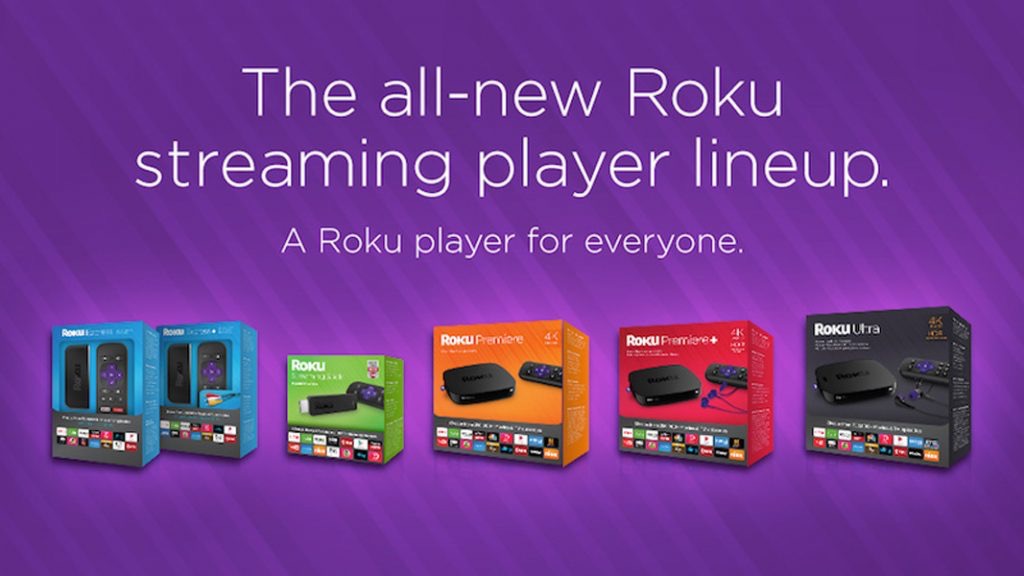
Roku is available in a variety of options. There is the Roku Express, Roku Streaming Stick, Roku Premiere/Premiere + and lastly the Roku Ultra, with both Premiere options and Ultra having being able to stream 4K content. Roku opens the user up to a variety of apps called “channels” that are easy to add from the built-in store.

Current Roku lineup as of October, 2016.

Bottom line: Try the Roku Player! With many different options to choose from, there is a Roku flavor to meet your needs, tastes and budget. Roku excels because of it’s ease of use and simple interface making it easy for new users and advanced users alike to come aboard.  Convinced?  Go here to see Roku for yourself.

Tech Elitism has to Stop! (Rise of Technocentrism)

Answer some questions for me.
Does using an Android device, tricking it out, overclocking it and having the latest custom ROM on it make you better than an iPhone user that simply likes to check email?  No.  Does having the latest iPhone, Mac and iPad, having tight integration and pretty products make you better than the Android user who just wants an affordable device?  No.  Does driving a Chevy make you better than all Ford drivers?  Does owning a PS4 grant you any special privileges over those who own XBox One consoles?
All answers to these questions are a resounding NO and I’m getting sick and tired of it.  This gives rise to a new term about those who think their tech is better than everyone else’s — “technocentrism“, you heard it here first.
Phones
I’ve listened to some of the most bigoted and contrite debates in the tech world regarding Android and iOS and in the past, I’ve been part of them.  But let’s face it, each mobile operating system and hardware manufacturer has their pluses and minuses.  Let’s take Android and break it down.  There are thousands of phones, no clear direction, laggy interfaces and buggy software implementations.  On the other hand, there are solid reference devices made by Google, which perform questionably better than most other offerings, valuable choices from OEMs and customizations that make owning a device worthwhile.  Let’s look at Apple and iOS.  There are only 3 choices, no customizations and software and interfances that you cannot control.  On the other hand, there is a fantastic ecosystem with minimal bugs, great implementation from top to bottom and simply great performing devices that you can count on.
Games
PC versus console, it never gets old.  PCs can be upgraded, while consoles cannot.  Consoles promote gaming together with people in real life due to numbers of connected controllers.

Do all of these things really matter?  Or are we missing the point?
Sure, it’s fun to debate about our gadgets, but that’s where it should end.  Owning one device over the other does NOT make you superior to those that do not.  I could call out names of podcasts and writers who portray this attitude, but I digress.  Needless to say, some of them should really get over themselves.

Just skip the Galaxy Note 7

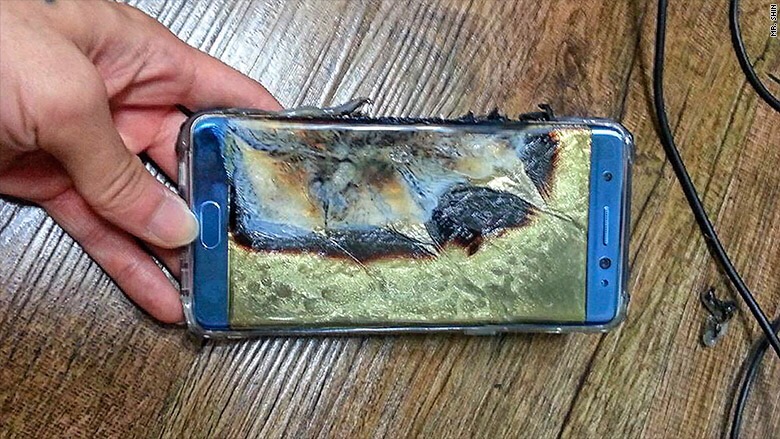
The Note 7, such a wonderfully crafted device by Samsung, would be on my instant  recommend list for my productivity needing friends, whom also needed a large screen device;however, since these so-called replacement devices are also STILL duds and catching fire — I can no longer recommend this device and maintain any dignity for myself.

Photo of a damaged Samsung Galaxy Note 7.

These “replacements” are the phones that customers thought would be safe and finally free them from this horrible storyline of “Samsung phones catching fire”. Well, unfortunately the story is not yet over because this problem is still not resolved. For a company of this magnitude, this is unacceptable and shouldn’t be taken lightly. The question here is what went wrong this second time around? Should other Samsung customers be worried? This company has been making great devices for years and this simply brings all of that into question.

Bottom line: This ship has sailed. DO NOT BUY THE GALAXY NOTE 7.